

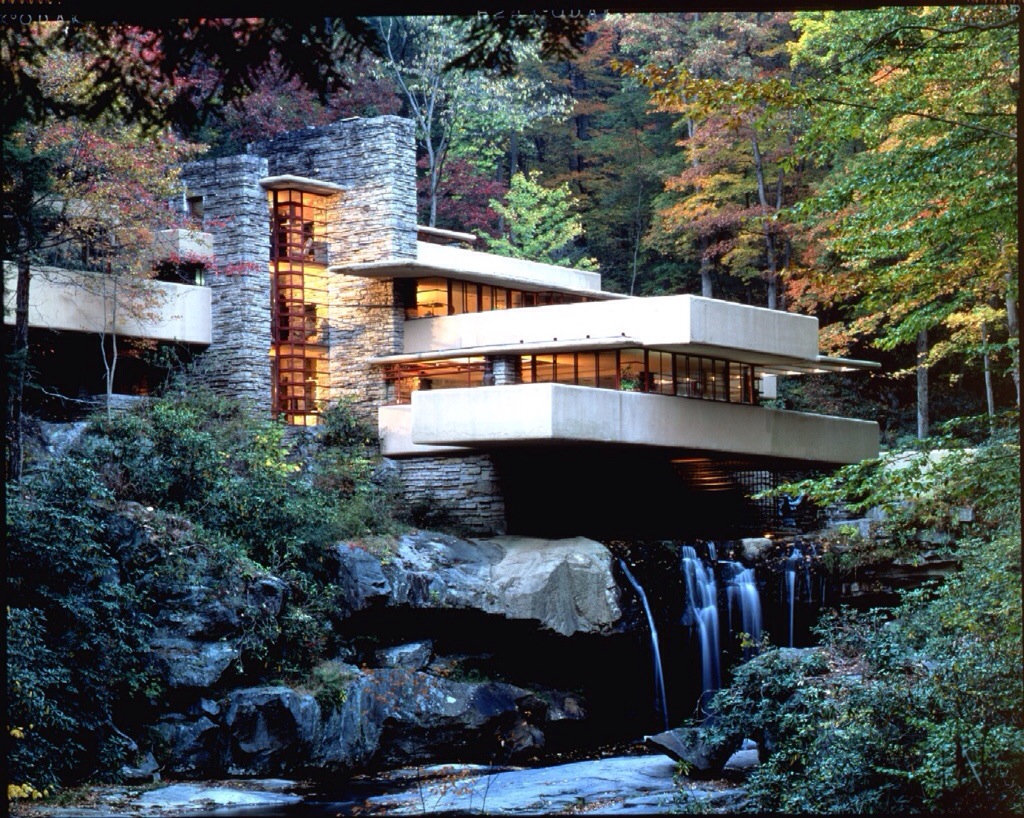
I’ve always admired Frank Lloyd Wright. I don’t know why because as an aspiring rock guitarist as a teenager, architecture was the last thing that was on my mind. However, once I saw a picture of “Falling Water”, I was instantly taken by it’s beauty and design. Maybe it was a similar pursuit in terms of being an artist that I found appealing…that is, simplicity is the ultimate form of sophistication. Listening to Barber’s Adagio for Strings, I always marveled at how Barber’s simple melody line could have a far greater aural resonance than a Bach concerto or sound as intricate as any one of Yngwie’s songs.
Falling Water has that same effect on me and as I have traveled in my professional pursuits, it has more relevance to me now in a completely different arena. With IBM, I was fortunate to work with so many great people and always have a pulse on what customers were doing with technologies and with technology frameworks. I first came across Enterprise Architecture (EA) in 2011 and I was instantly drawn to it. I was watching clients transform their whole IT department to fully embrace EA and reap it’s benefits.I read Jeanne Ross’ “Enterprise Architecture as Strategy” book over and over again and began applying EA concepts into my consulting engagements whenever possible.
As I transitioned out of IBM, I was lucky enough to land a role leading an IT architecture team and my boss had one initial directive for me; to draft a set of architecture principals for our company to use in all of our technology decisions. The choice to use EA was an easy one and our team produced, what I thought, was a great document around the primary EA domains of Business, Technology & Information architecture. When it came time to share our work, the picture of Falling Water was all I could think about to have on the cover. People would often try to wonder how this was connected to IT EA and I would share the following definitions from Wikipedia;
Architecture – Architecture has to do with planning, designing and constructing form, space and ambiance to reflect functional, technical, social, environmental and aesthetic considerations. It requires the creative manipulation and coordination of materials and technology, and of light and shadow. Often, conflicting requirements must be resolved. The practice of Architecture also encompasses the pragmatic aspects of realizing buildings and structures, including scheduling, cost estimation and construction administration. Documentation produced by architects, typically drawings, plans and technical specifications, defines the structure and/or behavior of a building or other kind of system that is to be or has been constructed. “http://en.wikipedia.org/wiki/Architecture”
Enterprise Architecture – “a well-defined practice for conducting enterprise analysis, design, planning, and implementation, using a holistic approach at all times, for the successful development and execution of strategy. Enterprise architecture applies architecture principles and practices to guide organizations through the business, information, process, and technology changes necessary to execute their strategies. These practices utilize the various aspects of an enterprise to identify, motivate, and achieve these changes.”[1]
Both definitions talk about planning, design, form, function, etc..When you look at Falling Water, you see how brilliantly Mr. Wright utilized nature to carve out this remarkable house and the strategies he used to build a house over a waterfall. When you look at a well crafted business strategy and you utilize EA as a framework, you find yourself tackling similar issues as Mr. Wright encountered constructing Falling Water, well, minus the water. While crafting an EA strategy can make you feel like you are working underwater at times, if you have a sound architecture team and set of principals, form follows function. Hopefully you will derive the benefits of the design for many decades to come.
 The Jesski's